The story behind the hymn
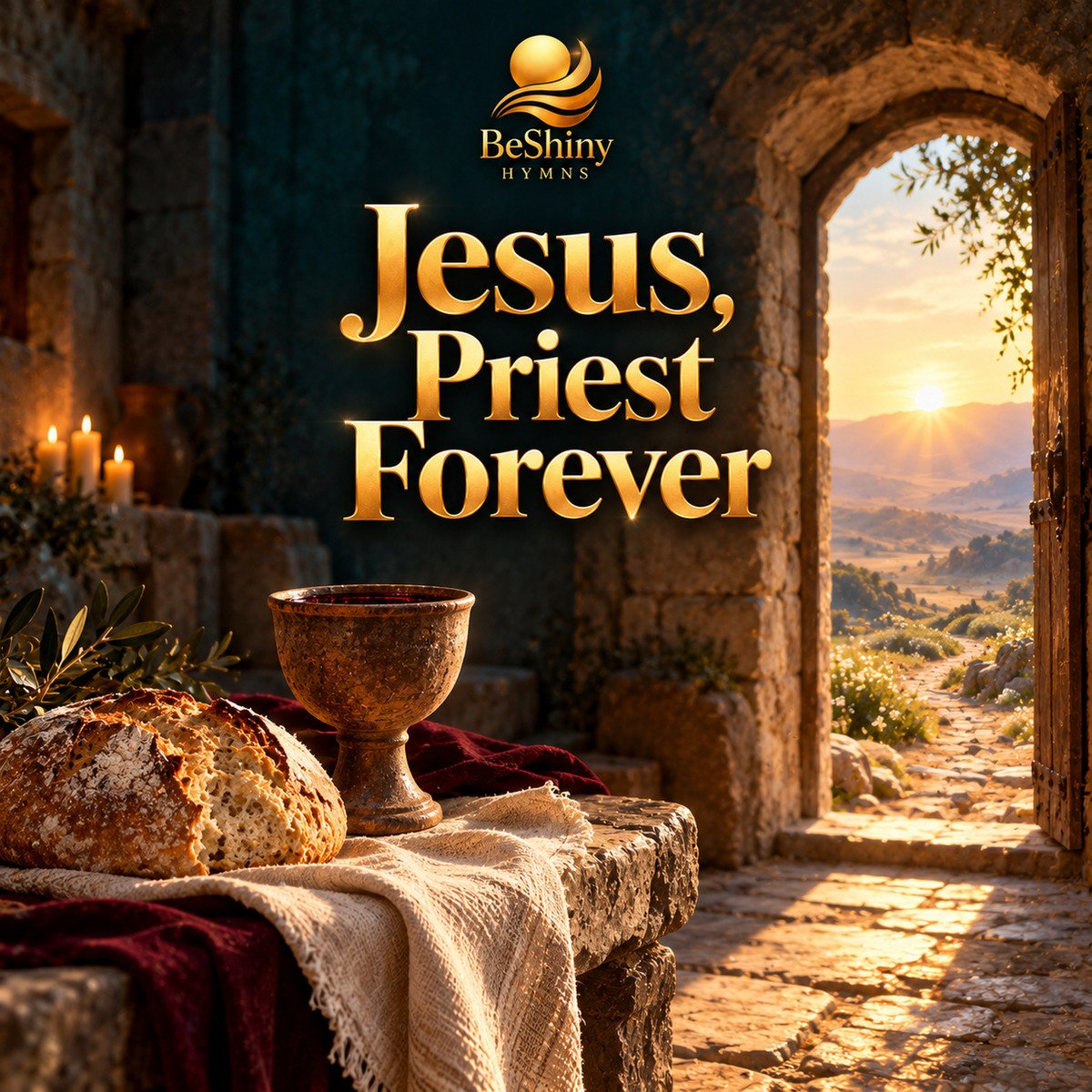
Melchizedek appears in Genesis 14 as king of Salem and priest of God Most High, bringing bread and wine and blessing Abram. Psalm 110 speaks of an enduring priesthood, and Hebrews draws these threads together in its account of Jesus. The hymn follows that scriptural movement towards the Son from Judah, whose self-offering is complete and whose risen life endures. His place at the Father’s right hand becomes a source of present confidence for those who draw near to God through Him.
The chorus addresses people whose hands are weary and whose knees tremble. Its later verses widen the horizon: the Spirit helps our weakness, creation waits in hope, and Christ gathers a royal priesthood to share His life. The imagery of water, oil and table expresses that shared sacramental life. Isaiah’s vision of the wilderness rejoicing then carries the hymn towards its final assurance: the risen Priest accompanies His people on the way and sustains their hope of God’s promised renewal.
The Scripture behind the hymn
Hebrews presents Jesus as the enduring High Priest whose once-for-all offering and continuing intercession bring His people near to God. Melchizedek’s scriptural portrayal points towards this priesthood: righteousness, peace and a life whose ending is left unrecorded. The Church’s royal priesthood is participation in Christ’s life and service, dependent upon His unique priesthood. Water, oil and table express the sacramental life of His household, while Isaiah’s promised renewal gives perseverance a generous and bodily horizon.
The musical setting
The arrangement is shaped as a forward-moving Celtic hymn in 4/4, with a warm low female lead and adult harmonies. Uilleann pipes, fiddle, cello, harp and acoustic guitar rise through the choruses, supported by restrained bodhrán.